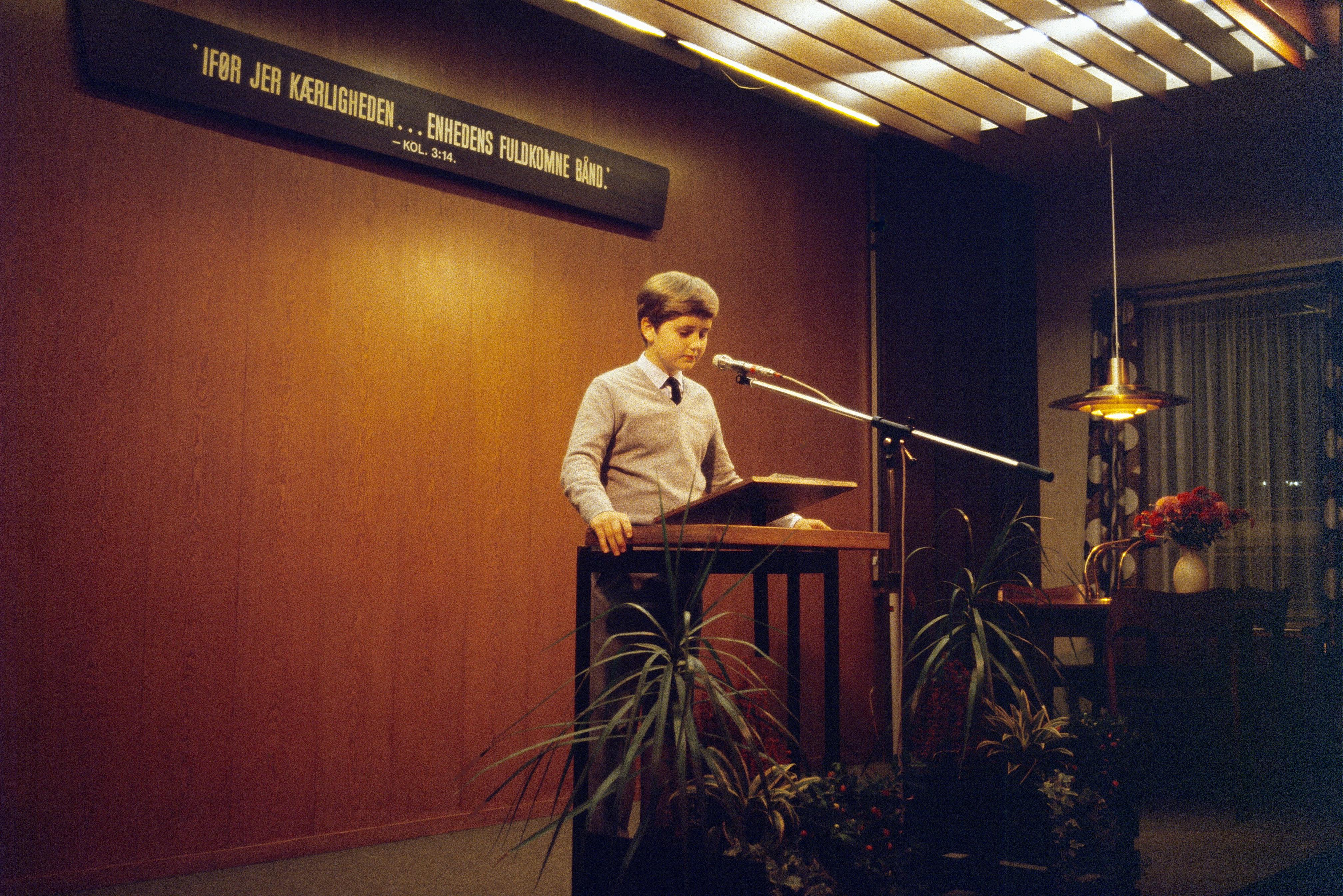
4 Signs Your Child Needs Public Speaking Training
Every parent has seen it. You walk into a restaurant, the waiter leans over and asks your child, "What would you like to order?" — and your child immediately turns to you, tugging your sleeve, whispering "You tell them."
Or maybe it's the school project presentation where your child spent a week preparing but froze the moment the teacher called their name. Or the birthday party where they hovered at the edge of the room while other kids laughed and played, uncertain how to join in.
These moments might seem small. As a parent, you may brush them off — "they're just shy," or "they'll grow out of it." But these everyday habits are actually important signals. They're your child's way of telling you they haven't yet built the communication tools they need to navigate the world with confidence.
The good news? These skills can absolutely be learned. And the earlier your child begins, the more naturally confidence becomes part of who they are.
Here are four everyday signs that your child may benefit from public speaking training — and what you can do about it.
Sign 1: Your Child Asks You to Speak for Them in Public
The restaurant scenario is one of the clearest signs parents overlook. When a child consistently asks a parent to order their food, speak to a shopkeeper on their behalf, or answer questions from adults, it usually points to one of two things: a fear of judgement, or simply never having been given the tools to handle those moments.
This behaviour is incredibly common — but it becomes a concern when it's a pattern, not just a one-off moment of shyness. The child who always defers to a parent in social interactions gradually learns that speaking up is something other people do, not them.
In everyday life, this plays out in ways that quietly limit them: they won't raise their hand in class even when they know the answer, they struggle to advocate for themselves with peers or teachers, and as they grow older, job interviews, university presentations, and social settings feel disproportionately difficult.
💡 What it looks like at home: "Mum, you ask." / "Dad, can you say it?" / Staying quiet when a stranger speaks to them even in friendly situations.
Public speaking training helps children practise exactly these real-world moments — introducing themselves, asking questions, expressing preferences — in a safe, encouraging environment. At Youth Orators Academy, Level 1 students specifically practise introducing themselves in social and school settings, building the very habits that replace withdrawal with confidence.
Sign 2: Hesitation and Withdrawal in Social Gatherings
Does your child consistently hang back at parties, family events, or group activities? Do they struggle to join a conversation already in progress, often waiting for someone else to include them — and quietly slipping away when no one does?
Social hesitation is often mistaken for introversion, and the two can look very similar. But there's an important difference: introverts can engage — they simply prefer quieter environments. Children who lack communication confidence often want to connect but don't know how. The social anxiety they feel isn't about personality — it's about skill.
Confident communication is not a gift some children are born with. It is a skill, like reading or mathematics, that develops through practice, frameworks, and repetition. When children aren't given structured opportunities to practise, the gap between what they feel inside and what they're able to express grows wider over time.
💡 What it looks like: Clinging to parents at social events, difficulty making new friends, staying silent in group discussions, reluctance to attend birthday parties or extracurricular activities.
At Youth Orators Academy, students work through impromptu speaking frameworks like PREP (Point, Reason, Example, Point) and the STAR method — tools that give children a mental structure to reach for when they feel put on the spot. Over time, these frameworks become instinctive, and social situations become less intimidating.
Students also participate in group sessions where they practise speaking, listening, and responding to peers — mirroring the exact social dynamics they encounter every day.
Sign 3: Struggling to Express Thoughts Clearly (Even When They Know What They Want to Say)
This sign is subtler and often missed by parents. Your child has a lot to say — you know this because at home, with you, they never stop talking. But the moment they're in front of others — a teacher, a group of classmates, a relative — the words don't come out right. Sentences trail off. They say "um" and "like" constantly. They get frustrated because what they're saying doesn't match what they mean.
This gap between thought and expression is one of the most common challenges in children between the ages of 8 and 16. It's not a sign of low intelligence — it's a sign that the communication muscle hasn't been trained.
In an age where children are increasingly consuming content passively — scrolling through videos, watching shows, gaming — the active practice of articulating ideas, structuring arguments, and holding an audience's attention is becoming rarer. And yet it's more important than ever.
💡 What it looks like: "I don't know how to say it." / Long pauses and fillers mid-sentence. / Frustration when they feel misunderstood. / Rambling without reaching a point.
Youth Orators Academy teaches students structured speaking frameworks specifically designed to address this. The K.I.S.S. principle (Keep It Short and Simple) for creative and article writing, the S.T.O.R.Y™ framework for storytelling, and tools like the 5W + 1H method for asking curious, clear questions all help children organise their thoughts before they speak — dramatically improving clarity and confidence.
Sign 4: Visible Anxiety Before Presentations, Performances, or Any "Spotlight" Moment
Most children feel some nerves before speaking in front of others — that's completely normal. But when that nervousness becomes paralysing — when your child refuses to participate in the school play, dreads being called on in class, or physically complains of stomach aches before any performance — it's a sign that the fear has outgrown what they're equipped to handle.
Stage fright in children is real, and it's more common than many parents realise. Left unaddressed, it compounds. The child who avoids the school presentation becomes the teenager who drops out of class activities. The teenager becomes the young adult who turns down opportunities — at university, at work — because the fear of speaking in public feels too overwhelming.
The earlier children are given tools to manage this anxiety, the easier it becomes to reframe "nerves" as energy, and to approach public moments with preparation and composure rather than dread.
💡 What it looks like: Refusing to perform or present. Physical complaints before school events (headaches, stomach aches). Extreme relief when an event is cancelled. Tears or tantrums around public speaking occasions.
At Youth Orators Academy, overcoming stage fear is the very foundation of the program. Students begin by learning breathing techniques and posture strategies that calm the nervous system before a speech. They practise in front of small, supportive groups, building tolerance and familiarity with the spotlight gradually — until "scary" becomes "normal," and eventually becomes something they look forward to.
The S.I.P.™ Method (Strength, Insight, Potential), used in every feedback session, ensures that students receive constructive, encouraging responses after they speak — so the spotlight becomes associated with growth, not shame.
Why Early Training Makes All the Difference
Public speaking is consistently ranked among the top skills employers, educators, and leaders wish more young people possessed. Yet it remains one of the least formally taught skills in traditional school curricula.
The children who develop communication confidence early don't just become better speakers. They become better listeners, clearer thinkers, more empathetic collaborators, and more resilient individuals. The voice they find in a classroom or a stage becomes the voice they carry into every area of their life.
Research in child development consistently shows that children who engage in structured communication programs demonstrate higher academic performance, stronger social relationships, and greater emotional regulation. Communication confidence is not a nice-to-have — it is a foundational life skill.
What Can You Do Next?
If you recognised your child in one or more of the signs above, you're not alone — and there's no reason to wait. The habits of hesitation and withdrawal that develop in early childhood can be gently and effectively reshaped with the right environment and the right guidance.
Youth Orators Academy offers a structured, five-level program designed specifically for children of all ages and temperaments — from the child who has never spoken in public before, to the young person ready to step into thought leadership.
Every student at YOA is met exactly where they are. There is no pressure, no judgment, and no competition for attention. Just a safe, uplifting space where your child discovers what their voice is capable of.
Here's what your child will gain from the very first level:
Confidence to speak in everyday social situations — including ordering at restaurants, asking questions, and introducing themselves
Frameworks for impromptu and prepared speaking — PREP, STAR, PPP, S.T.O.R.Y™ and more
Tools to manage nervousness and stage fright — breathing, posture, and mindset techniques
A supportive peer community — where feedback builds up, never tears down
Habits of emotional intelligence and self-expression — that serve them far beyond the stage
Your child's voice matters. And with the right support, they'll learn to use it.
Join a Free Trial Class at Youth Orators Academy
Give your child the gift of confident communication. Visit youthoratorsacademy.com to reserve your child's free trial class today.
